Showing posts with label Gender. Show all posts

Thursday, December 31, 2015

2015: The Year That It Was


 How was 2015? Sharing here a few leaves out of my diary that's full of memories - of traveling and story-telling.

January
With Village Women who Fight Traffickers


The first trip of the year took me to the villages of Lambadi people (a Nomadic tribe) in Mahabubnagar district of Telangana. Not so long ago, these villages were a notorious hub for sale and trafficking of baby girls. But today, local women are ensuring that every girl goes to school. They also fighting against child labor and child marriage. Here you can read their inspiring story - Not Without Our Daughters: Lambada Women Fight Infanticide and Child Trafficking.


February
Telling stories of India’s Development Refugees


In February, I met men, women and children of Koya and Konda – primitive forest tribes living in India’s Eastern Ghat mountain. Soon, thousands of them will become refugees as a mega dam is coming up in their homeland. Here is the link to their story  'Development refugees' resist Indian dam


But even as uncertainty is looming large over their future, the tribal community is learning skills that will keep them food-secure even in the most adverse situation. Here you can read that story "In the Shadow of Displacement, Forest Tribes Look to Sustainable Farming"

Thursday, December 03, 2015

A ray hope for Neha at COP21

21st UNFCCC Conference of the Parties or COP21 has just begun. Its THE most important climate summit of our lifetime where we expect the world to strike a climate deal - one that will be "gender responsive". On the occasion, I am running a 2-week blog campaign, connecting the dots among COP21, Climate Change and Gender


 A very interesting development took place on the 3rd day of COP21: the World Bank Group announced that it would make a  US$500 million investment to support one of India's groundwater program.  India, we must remember, is the world’s largest consumer of groundwater.

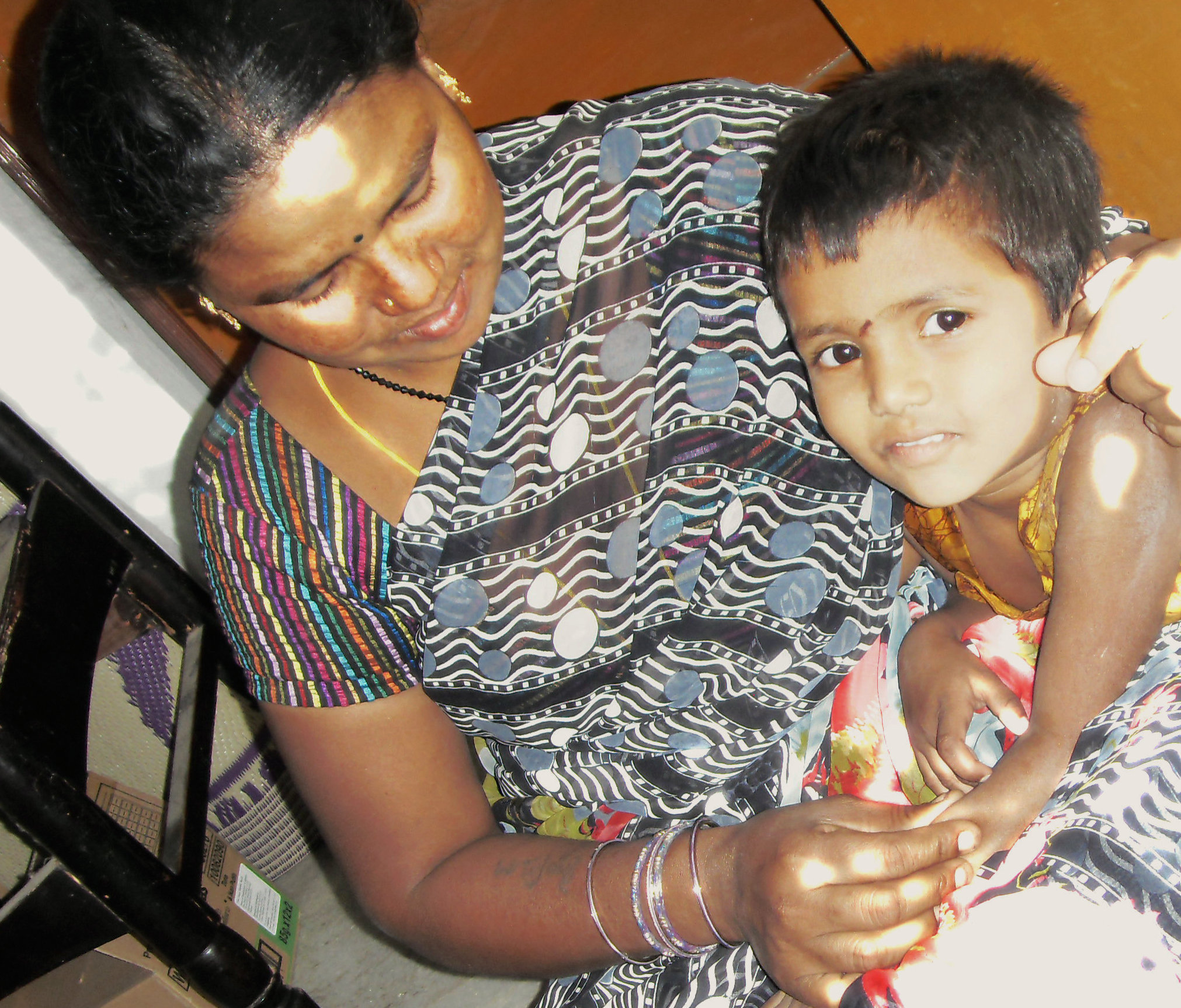
The announcement made me think of Neha - the little girl in the picture - a 6th grade school student who spends several hours out of school, drawing water for the family everyday from a small pond. The quality of water - as you can see - is horrible.
A muddy pond - the main source of water for Neha


Thursday, October 02, 2014

Gender-Inclusive Adaptation: Vanuatu Shows the Way

Have you ever been to, or, if you pardon my saying so, even heard of Vanuatu? I honestly hadn’t and actually had to search Wikipedia for help! And this is what I found: it’s a very small country on the pacific coast, next to Fiji and New Guinea. The population of the entire country is just 250,000 – which is smaller than some of our cities.

It was from this tiny, hard-to-find-on-the-map island nation that we heard one of the most powerful pieces of information on the 1st day of the 4th Asia Pacific Climate Change Adaptation Forum in Kuala Lumpur (APAN2014): the country is following a 50% reservation for women policy when it comes to negotiating climate change and also implementing climate change adaptation projects.

 
An areal view of Vanuatu


I was at a session on “gender sensitive adaptation” in Johar Keda auditorium of the Putra World Trade Center where the forum is taking place.

Thursday, July 24, 2014

Impact of my story: woman freed from forced laborer

Its a beautiful, beautiful day. You know why? Because, a woman forced laborer who I had recently reported about,  has just been set free by her employer. Here's the story of her release. You can also read it in the website of IPS News - the media outlet where my story had first appeared.
----------------------------------------------------------------------------------------------------------------------


The first time I met Sri Lakshmi, she was climbing a flight of stairs in a half-constructed building in the residential area of Vanasthalipuram, in the South Indian city of Hyderabad, carrying a stack of bricks on her head. She was a forced labourer, who received no payment for her work. That was in mid-April.

Last week, I met her again. This time, she was carrying something entirely different: a school bag that belonged to her four-year-old daughter Amlu. Lakshmi was a free citizen and Amlu was going to school for the first time.

Separating our two meetings is a story that was published by IPS entitled ‘No Choice but to Work Without Pay. It was this article that stirred action on the ground, paving the way for Lakshmi’s release.

Here is how it all happened:
Sri Lakshmi, a recently released forced labourer, and her four-year-old daughter Amlu. Credit: Stella Paul/IPS
Sri Lakshmi, a recently released forced labourer, and herfour-year-old daughter Amlu

Monday, July 07, 2014

The Day I Couldn't Urinate: Reporting Sanitation Issues In India

It's well known by now: a majority of Indians do not have a toilet. They urinate and defecate in the open. They include men, women, children and adolescent girls. It’s a shame. It's indignity epitomized. But do you ever think what does a journalist who covers sanitation issues in India go through? Well, it’s the same shame and indignity. Let me tell you about one day - JUST ONE OF THE MANY DAYS - that I had to experience this.

I was in Handitola village in Rajnandgaon district of Chhattisgarh state in central India. With me was a local woman social activist. We arrived at the house of the village council head (locally known as 'sarpanch'). As it turned out, she was away from home, and would return in another half an hour. Her son and daughter-in-law were at home and they requested us to sit. They also offered to make tea for us.
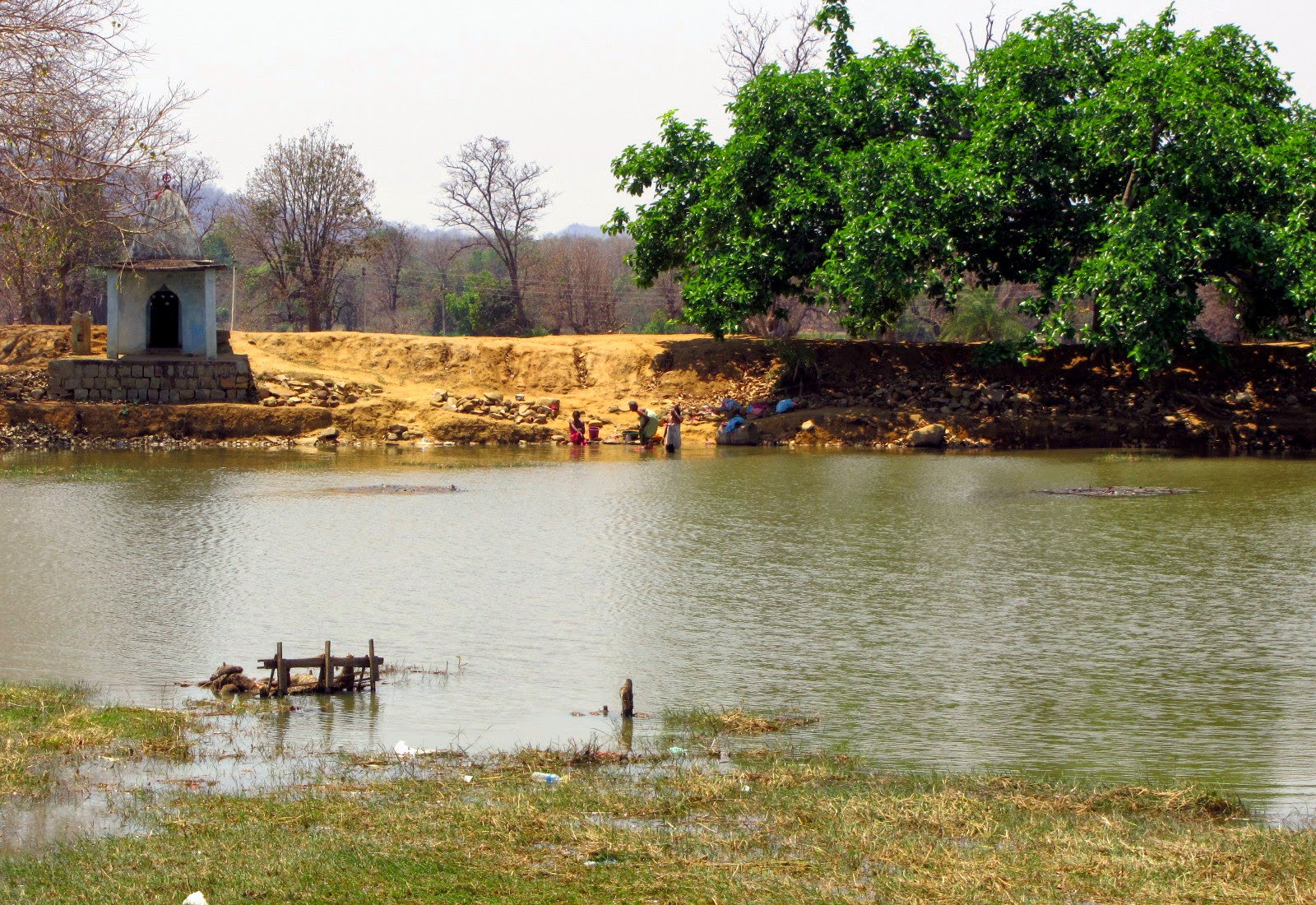
A typical community owned pond in a village. Villagers bathe there, as do - often times -their cattle, they wash their clothes and carry home pitchers of water to wash utensils and cook. The banks are usually where they squat on to relieve themselves.The tiny structure is the shrine of the patron god of the village


We were waiting. The house had a neat courtyard, 3 rooms, a nice little veranda and a cowshed. I walked around a bit, peeped here, peeped there. I could see no toilet.

We had eaten a rather large breakfast in the morning at Bhan Didi’s (the activist) place because it was going to be a long day, and I also drank a large glass of chai. Now, I was feeling the pressure on my bladder. I needed to go, urinate. But, there was no place to go.

Monday, June 02, 2014

Badaun Rape and Murder: Lets Stay Angry


If you have been following the news from Asia in the past few days,  you may have heard of the latest act of violence against women that has horrified India: 2 teen age girls abducted, raped and then hanged in a village called Katra Sahdatganj of Badaun - a district about 220 km north-east of New Delhi. The girls were cousins and had gone out to relieve themselves in the bush because their home didn’t have a toilet, when they went missing. 


The heart-wrenching story told by one of the girl’s father reveals that the girls were abducted in 27th May (Tuesday) evening. The father went to the police that night, pleaded with them to find his girls, but the policemen on duty refused to either listen or act. In fact, one of them mocked the man who is from a 'lower caste' and said ‘go and check, you may find your girls hanging from a tree’. Next day, just as the policeman had said it, the father – and the rest of the village – indeed saw the girls’ bodies hanging in an orchard.

Since the news came in the light, protests and condemnations have poured in from all quarters.  A number of political leaders have visited the girls’ family and expressed their sympathy. The media has been camping in the village and has been reporting many more cases of rape and abduction of women that have taken place in that area. The latest words of condemnation have come from the United Nations which hassaid, ‘Violence against women is a human rights issue, not a women's issue’.

Now, besides the obvious lack of security for women and good governance, the horrible rape and murder also point out another of India’s ugliest truths: women are increasingly falling prey to sexual predators due to lack of sanitation facilities.

Thursday, November 21, 2013

A toast to Tarun Tejpal!

So, just when you thought you had heard enough stories of  rape and sexual assaults and all that s**t coming of India, here comes yet another headline: Tarun Tejpal, chief editor of Tehelka - an Indian  news magazine that is known for its bold and honest journalism - has sexually assaulted one of his woman colleagues.

Now, sexual assaults are no laughing matter. And yet this one has me in splits. The reason is, this man Tarun Tejpal - one of the country's 'most respected' journalists (and also often seen as a panelist/speaker/chief guest at events organized to condemn rapes/violence against women etc) has figured out the punishment for his crime all by himself :  a 6-month long holiday which he calls "atonement".