Showing posts with label India rape. Show all posts

Tuesday, June 02, 2015

Toilets: teaching is better than talking!

Sometime in April, I met Roopa, an extraordinary young woman, in a village called Nagenhalli in south-west India. She was smart, friendly, warm and very pretty. But what made me call her extraordinary is this: the woman had built a toilet, all by herself.

Roopa's toilet
Now, before I tell you how she built the toilet, let me share the 'why':

Roopa is a Dalit and her mother is a former temple sex slave. All the men from her village wanted Roopa to also become a sex slave and, as she reached puberty, they began to look at her with lust. So, one day Roopa's mother ran away to another village miles away from her  own, taking along her 6 children.

But in their new village, women and girls were often sexually harassed and assaulted by men from
'higher castes'. Most of these assaults took place when girls and women went to relieve themselves in the open.

Saturday, September 20, 2014

Developing like Singapore? Go Beyond the Obvious!

This year, Singapore seems to have emerged as one of the most favored nations of Indian leaders. First, our foreign minister Sushma Swaraj visited Singapore. Soon after, Mamata Banerjee - the chief minister of West Bengal and Vasundhara Raje, chief minister of Rajasthan went there. Next in line was K Chandrasekhar Rao - the chief minister of Telangana - India's newest state. And then we saw the chief minister of Andhra Pradesh playing host to  Foreign Affairs minister of Singapore. Though they all went their own individual way, there was something common about these visits: woo Singapore to invest into and engage with the development process in their respective states.


As I follow these interactions, I wonder, has any of the dialogues ever moved beyond the obvious roads and ports?  Has any of our leaders thought of partnering with Singapore in areas where the country has failed the most : sanitation, water, hygiene and safety for women?

Monday, July 07, 2014

The Day I Couldn't Urinate: Reporting Sanitation Issues In India

It's well known by now: a majority of Indians do not have a toilet. They urinate and defecate in the open. They include men, women, children and adolescent girls. It’s a shame. It's indignity epitomized. But do you ever think what does a journalist who covers sanitation issues in India go through? Well, it’s the same shame and indignity. Let me tell you about one day - JUST ONE OF THE MANY DAYS - that I had to experience this.

I was in Handitola village in Rajnandgaon district of Chhattisgarh state in central India. With me was a local woman social activist. We arrived at the house of the village council head (locally known as 'sarpanch'). As it turned out, she was away from home, and would return in another half an hour. Her son and daughter-in-law were at home and they requested us to sit. They also offered to make tea for us.
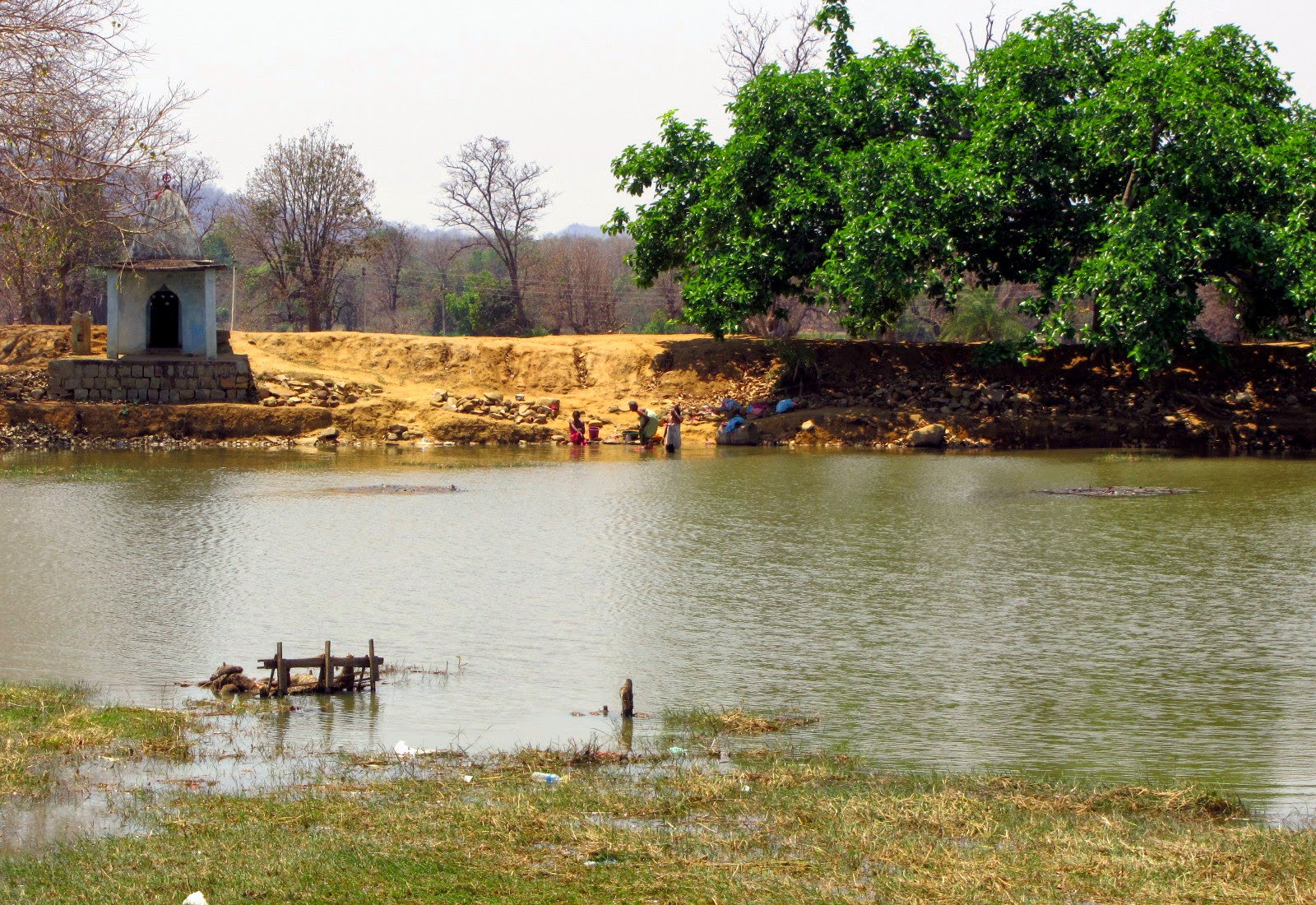
A typical community owned pond in a village. Villagers bathe there, as do - often times -their cattle, they wash their clothes and carry home pitchers of water to wash utensils and cook. The banks are usually where they squat on to relieve themselves.The tiny structure is the shrine of the patron god of the village


We were waiting. The house had a neat courtyard, 3 rooms, a nice little veranda and a cowshed. I walked around a bit, peeped here, peeped there. I could see no toilet.

We had eaten a rather large breakfast in the morning at Bhan Didi’s (the activist) place because it was going to be a long day, and I also drank a large glass of chai. Now, I was feeling the pressure on my bladder. I needed to go, urinate. But, there was no place to go.

Monday, June 02, 2014

Badaun Rape and Murder: Lets Stay Angry


If you have been following the news from Asia in the past few days,  you may have heard of the latest act of violence against women that has horrified India: 2 teen age girls abducted, raped and then hanged in a village called Katra Sahdatganj of Badaun - a district about 220 km north-east of New Delhi. The girls were cousins and had gone out to relieve themselves in the bush because their home didn’t have a toilet, when they went missing. 


The heart-wrenching story told by one of the girl’s father reveals that the girls were abducted in 27th May (Tuesday) evening. The father went to the police that night, pleaded with them to find his girls, but the policemen on duty refused to either listen or act. In fact, one of them mocked the man who is from a 'lower caste' and said ‘go and check, you may find your girls hanging from a tree’. Next day, just as the policeman had said it, the father – and the rest of the village – indeed saw the girls’ bodies hanging in an orchard.

Since the news came in the light, protests and condemnations have poured in from all quarters.  A number of political leaders have visited the girls’ family and expressed their sympathy. The media has been camping in the village and has been reporting many more cases of rape and abduction of women that have taken place in that area. The latest words of condemnation have come from the United Nations which hassaid, ‘Violence against women is a human rights issue, not a women's issue’.

Now, besides the obvious lack of security for women and good governance, the horrible rape and murder also point out another of India’s ugliest truths: women are increasingly falling prey to sexual predators due to lack of sanitation facilities.

Sunday, March 10, 2013

War against rape: we must first own responsibility

Something extraordinary happened today: the police re-arrested Bitty Mohanty, a rapist who was convicted 6 years ago but had run away. I call this extraordinary because it shows the administration is ready to take rapes seriously. The question is, can solo action like this make India safe for women? As my answer to this question, I share here my Op-ed that was recently published in Huffington Post..
--------------------------------------------------------------------------------------------------------------
It has been more than two months since the December 16 gang rape and murder of a 23-year-old woman in New Delhi. Since then well over a million people -- men and women, young and old -- have taken to the streets to condemn the rape and demand justice.


They have marched in silence, holding placards with messages like "Death to the Rapists," "Save Our Women," and "End Rape Now." The protests have taken place in almost every city: Mumbai, Chennai, Bangalore, and Kolkata. Even small towns like Lucknow, Ahmedabad, and Pune have been a part of the action. In my own city of Hyderabad in the south of India, women have for the very first time taken part in a midnight march to claim their rights to be out on the street at any time. In Bangalore, men marched on the streets wearing skirts -- their way of showing that a woman's choice of clothing does not cause a man to rape.

Photo courtesy: One India


Every day, I see photos of protest marches on my Facebook feed, and Twitter users have generated well over a million tweets with hashtags like "delhigangrape" and "braveheart" -- the name the media gave to the anonymous rape victim.

As yet another Indian woman who has experienced molestation and sexual harassment early in her life, I have found these developments both sad and electrifying. Sad because a woman was tortured and murdered, but also sad because this was probably the 5,000th time I heard of a woman in India being raped. Statistics from the National Crime Record Bureau of India show that since 1953 there has been an 873 percent rise of rape cases in India. In 2012 alone, we have seen horrific rape cases involving four-year-old baby girls and 80-year-old women. But never, ever have I seen a group of even 100 people come together to protest these acts.

Monday, December 31, 2012

2012: 10 Lessons India Taught It's Women

Lesson 1. Rape is on the rise and Woman, its thy fault
Rapes in India have risen by 873% in past five decades. And from politicians to members of  the parliament to top cops, everyone thinks that its majorly women's fault. Here is a sample: right at the beginning of the year, Dinesh Reddy, the Director General of Hyderabad (where I live) said, "rape is increasing because women have started dressing fashionably" and ‘women provoke men to rape them by wearing flimsy clothes.

(Oh, and the cop not only got away with that,  but actually got a pat on the back. Last month, he became the president of Indian Hockey Federation. Don't be surprised if our women hockey players are now ordered to play in Pyjamas!)

Lesson 2. Know that thy Law maker's job includes watching Porn at work and preach you on decency

It's a male law maker's prerogative to chastise women and decide what kind of clothes they will wear, even when he will watch porn, right inside the assembly building.
Example: A minister in Bangalore, was caught watching a porn clip right within the state Assembly in February this year. The minister had advised women many times to wear less revealing clothes to avoid getting raped.