Showing posts with label Sanitation. Show all posts

Wednesday, July 22, 2015

Smart Sanitation: Shimla Sets an Example

A couple of days back, I read this really great news about Shimla - a hill station in the north of India: the popular tourist hub is aiming for smart sanitation by installing hundreds of E-toilets.

Now, what is E-toilet? Well, its an unmanned toilet which cleans itself, one that's based on a sensor-based technology.

Let me explain a little more.  As you see in the photo below, the toilet has a locked door. Now, when you want to use it, you insert a coin to open the door. As the door opens, the toilet's sensor-based light system is automatically turns on - pretty much like the way your ATM teller machine turns on when you swipe your card.
An E-toilet. Courtesy: Eram Scientific

And, just like the ATM machine, the toilet also will direct you with audio commands. This means, you will be directed on how to use the toilet.

To conserve water, the toilets are programmed to flush 1.5 liter of water after three minutes of usage and 4.5 liters if the usage is longer. This “smart” toilet also washes the platform by itself after every five or 10 persons use the toilet. An instructional note is pasted outside the toilet to make the user familiar with the functioning of this toilet. The auto flush goes off on its own and uses just the right amount of water that is needed - not less and not more.

 But why is Shimla adopting e-toilet, instead of building more of the old-style conventional toilets?

Tuesday, June 02, 2015

Toilets: teaching is better than talking!

Sometime in April, I met Roopa, an extraordinary young woman, in a village called Nagenhalli in south-west India. She was smart, friendly, warm and very pretty. But what made me call her extraordinary is this: the woman had built a toilet, all by herself.

Roopa's toilet
Now, before I tell you how she built the toilet, let me share the 'why':

Roopa is a Dalit and her mother is a former temple sex slave. All the men from her village wanted Roopa to also become a sex slave and, as she reached puberty, they began to look at her with lust. So, one day Roopa's mother ran away to another village miles away from her  own, taking along her 6 children.

But in their new village, women and girls were often sexually harassed and assaulted by men from
'higher castes'. Most of these assaults took place when girls and women went to relieve themselves in the open.

Monday, April 20, 2015

Clean India: There's No Glory in Being Stupid!

Last week I was in north Karnataka. One of the biggest attractions there is the dam over river Tungabhadra which provides water to several districts of north Karnataka and neighboring Andhra Pradesh.  I was told that this is a must-see and they were right: the dam was truly beautiful.

          
But every time I crossed over one of the branch canals of the dam, I saw it littered with trash. So, there were people bathing, washing and drawing water from the canals for their other needs while also throwing their trash in!  How disgusting!

I returned from the trip yesterday and saw the trash collector with her van. The woman -  employed by the  municipality - comes 3 times in a week and collects the trash. We have to pay her 50 rupees which is actually less than what a packet of cigarettes (about 90 rupees) or, a large bottle of Coke costs (80 rupees).

But every time the woman comes, she collects trash from only a few families in our lane. The reason? Others are not ready to pay her 50 rupees for trash disposal. And these are educated people from fairly well to do families!

So, how do they dispose their trash? Well, they go out in the evening with a bundle of trash ( a plastic bag) and throw it by the roadside. Sometimes, the trash collectors stop by and pick them up, sometimes they just rot there. Often, dogs tear them often, if they smell meat or fish.

Saturday, September 20, 2014

Developing like Singapore? Go Beyond the Obvious!

This year, Singapore seems to have emerged as one of the most favored nations of Indian leaders. First, our foreign minister Sushma Swaraj visited Singapore. Soon after, Mamata Banerjee - the chief minister of West Bengal and Vasundhara Raje, chief minister of Rajasthan went there. Next in line was K Chandrasekhar Rao - the chief minister of Telangana - India's newest state. And then we saw the chief minister of Andhra Pradesh playing host to  Foreign Affairs minister of Singapore. Though they all went their own individual way, there was something common about these visits: woo Singapore to invest into and engage with the development process in their respective states.


As I follow these interactions, I wonder, has any of the dialogues ever moved beyond the obvious roads and ports?  Has any of our leaders thought of partnering with Singapore in areas where the country has failed the most : sanitation, water, hygiene and safety for women?

Monday, July 07, 2014

The Day I Couldn't Urinate: Reporting Sanitation Issues In India

It's well known by now: a majority of Indians do not have a toilet. They urinate and defecate in the open. They include men, women, children and adolescent girls. It’s a shame. It's indignity epitomized. But do you ever think what does a journalist who covers sanitation issues in India go through? Well, it’s the same shame and indignity. Let me tell you about one day - JUST ONE OF THE MANY DAYS - that I had to experience this.

I was in Handitola village in Rajnandgaon district of Chhattisgarh state in central India. With me was a local woman social activist. We arrived at the house of the village council head (locally known as 'sarpanch'). As it turned out, she was away from home, and would return in another half an hour. Her son and daughter-in-law were at home and they requested us to sit. They also offered to make tea for us.
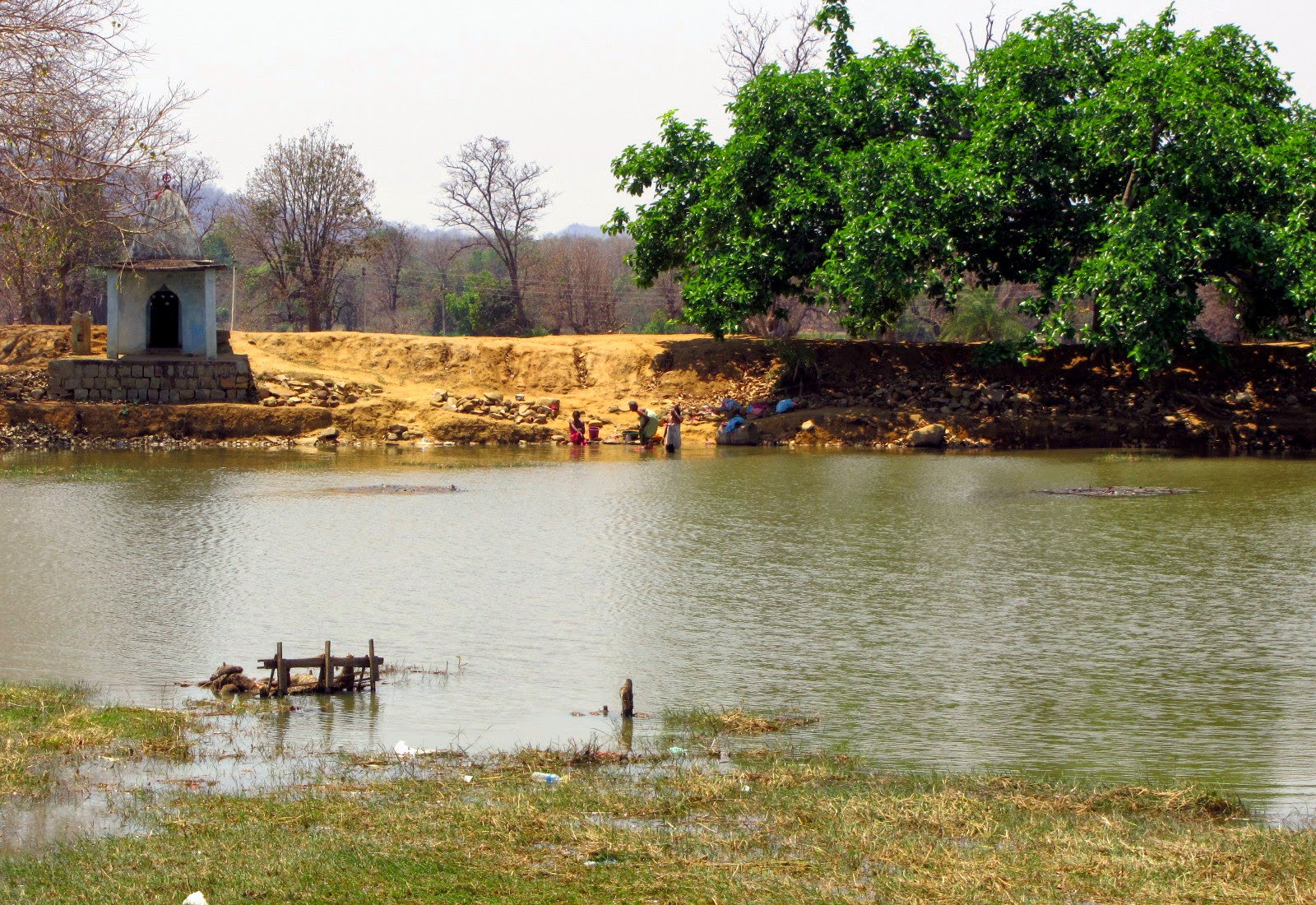
A typical community owned pond in a village. Villagers bathe there, as do - often times -their cattle, they wash their clothes and carry home pitchers of water to wash utensils and cook. The banks are usually where they squat on to relieve themselves.The tiny structure is the shrine of the patron god of the village


We were waiting. The house had a neat courtyard, 3 rooms, a nice little veranda and a cowshed. I walked around a bit, peeped here, peeped there. I could see no toilet.

We had eaten a rather large breakfast in the morning at Bhan Didi’s (the activist) place because it was going to be a long day, and I also drank a large glass of chai. Now, I was feeling the pressure on my bladder. I needed to go, urinate. But, there was no place to go.

Monday, June 02, 2014

Badaun Rape and Murder: Lets Stay Angry


If you have been following the news from Asia in the past few days,  you may have heard of the latest act of violence against women that has horrified India: 2 teen age girls abducted, raped and then hanged in a village called Katra Sahdatganj of Badaun - a district about 220 km north-east of New Delhi. The girls were cousins and had gone out to relieve themselves in the bush because their home didn’t have a toilet, when they went missing. 


The heart-wrenching story told by one of the girl’s father reveals that the girls were abducted in 27th May (Tuesday) evening. The father went to the police that night, pleaded with them to find his girls, but the policemen on duty refused to either listen or act. In fact, one of them mocked the man who is from a 'lower caste' and said ‘go and check, you may find your girls hanging from a tree’. Next day, just as the policeman had said it, the father – and the rest of the village – indeed saw the girls’ bodies hanging in an orchard.

Since the news came in the light, protests and condemnations have poured in from all quarters.  A number of political leaders have visited the girls’ family and expressed their sympathy. The media has been camping in the village and has been reporting many more cases of rape and abduction of women that have taken place in that area. The latest words of condemnation have come from the United Nations which hassaid, ‘Violence against women is a human rights issue, not a women's issue’.

Now, besides the obvious lack of security for women and good governance, the horrible rape and murder also point out another of India’s ugliest truths: women are increasingly falling prey to sexual predators due to lack of sanitation facilities.